Food Refusal and Avoidant Eating in Children, including those with Autism Spectrum Conditions: A Practical Guide for Parents and Professionals
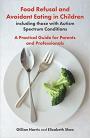
FAB RESEARCH COMMENT:
If your child is one of the increasing number showing serious 'food refusal' and highly retricted eating patterns, reading this book could be a game-changer.
All young children go through a phase when they refuse, avoid or seem 'fearful' of new foods - and for as many as one in five, this may develop into a longer period of 'fussy' or 'picky' eating.
However, for children with the mental health condition now defined as 'ARFID' - Avoidant Restrictive Food Intake Disorder - their selective eating and food refusal is extreme, and ultimately based on deep-rooted fear and anxiety. This means that many of the tactics that might help with 'normal' fussy eating simply don't work - and can make matters worse.
The authors of this book are both experts in this area, and this practical but evidence-based book reflects their many years of professional and personal experience helping parents and children with feeding problems and eating disorders.
Many children with Autism Spectrum Disorder (ASD) have a restricted dietary range, and this book provides parents with advice and training on how to deal with this condition and achieve a healthier and more balanced diet.
Now described as Avoidant or Restrictive Food Intake Disorder (AFRID), it is due to sensory hypersensitivity, and it can impact upon the health of the child, upon the family, and upon social integration.
Based upon successful training packages the authors provide for parents and professionals, this book enables the reader to understand the condition and work with it, gradually increasing the range of food a child is able to eat. It includes 'box outs' with case studies, points of interest and action points to make this an accessible and resourceful read.

Food and Behaviour Research is a registered charity (No SC034604) and a company limited by guarantee (Co No SC 253448)
Newsletter Signup
Useful Links
Contact Us
FAB Research
23 Carlton Road
Oxford
OX2 7SA
Important Notice
Medical opinion and guidance should always be sought for any symptoms that might possibly reflect a known or suspected disease, disorder or medical condition. Information provided on this website (or by FAB Research via any other means) does not in any way constitute advice on the treatment of any medical condition formally diagnosed or otherwise.
Site by Redstone Websites. Easy to Use Web Content Management. 2026 © All Rights Reserved.