Food and Behaviour Research

Donate Log In

UK Nutrient Gaps and Impacts on Early Development with Dr Emma Derbyshire and TC Callis - BOOK HERE

Low vitamin D during first trimester linked to preterm birth risk
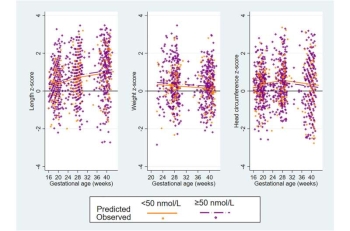
by Aaron Wagner, Pennsylvania State University

Credit: The American Journal of Clinical Nutrition (2024). DOI: 10.1016/j.ajcnut.2024.11.018

This research indicates that vitamin D levels—along with iron, folate and other essential nutrients in pregnancy—should be monitored and understood by obstetricians and women early on to promote healthy birth outcomes.

FAB RESEARCH COMMENT:

Preterm birth (especially if this is very early) can lead to lifelong mental and and physical health problems.

Highest-level evidence (from rigorous systematic reviews and meta-analyses) has aleady shown that increased intakes of the long-chain omega-3 fatty acids found in fish and seafood can significantly reduce preterm birth rates (sand save governments money, even in the short-term). See:

What's more, detailed clinical practice guidelines also show how this could be implemented simply (and cheaply):


And yet for unknown reasons, no mention whatsoever of any of this evidence was included in the recent revision of the UK's NICE guidelines for healthcare during pregnancy... and similarly 'Healthy Eating Guidelines' not only fail to flag fish and seafood as the primary natural source of long-chain omega-3 - but also include warnings likely to deter pregnant women from eating fish and seafood.

For an expert discussion of these issues, see our recent FAB webinar:

and to learn more about the extensive scientific and real-world evidence that the benefits of eating fish and seafood in pregnancy far outweigh possible risks (and alternative ways to get those benefits for vegans, vegetarians or other non-fish-eaters), see this 'masterclass' webinar from a world-leading expert in this area:


Fish and seafood is also one of the only dietary sources of Vitamin D - although bright sunlight on the skin is the main source, and modern lifestyles (and diets) mean that most of the UK population has low or suboptimal levels during the winter months, if not all year round.

Vitamin D deficiencies and insufficiencies in pregnancy have also been repeatedly linked with higher risks for ADHD, autism and schizophrenia in the offspring - and poorer neurodevelopmental and mental health outcomes in general than for babies whose mothers have adeqqate Vitamin D during pregnancy.

This latest research shows that low Vitamin D in pregancy - particularly in the 1st trimester, predicted higher rates of preterm birth. 

For details of the research, see:


For further information please see:


And for more information on these topics, please see also the following lists of articles on this subject, which are regularly updated:

07/02/25 - Medical Xpress

------------------------------

Low vitamin D levels in the first trimester of pregnancy are associated with higher rates of preterm birth and decreased fetal length, according to a new study led by researchers in the Penn State Department of Nutritional Sciences. This research provides evidence that early pregnancy or even preconception may represent critical time points for intervening with women who have low vitamin D status, to optimize pregnancy outcomes.
 
Celeste Beck, who earned her doctorate in nutritional sciences from Penn State in 2023 and currently works as associate research scientist lead at Heluna Health, and Alison Gernand, Beck's doctoral adviser and associate professor of nutritional sciences at Penn State, led the study. Their results were recently published in The American Journal of Clinical Nutrition.
 
"More than 25% of women who are pregnant or lactating have lower than recommended levels of vitamin D," Gernand said, explaining that prior research has demonstrated the effect of vitamin D on fetal skeletal growth, maternal immune function at the fetal interface, and the development of the placenta in pregnant women.
 
"A lot of the development early in pregnancy requires vitamin D, so we conducted this study to better understand how early-pregnancy vitamin D status is related to pregnancy outcomes."
 
Most prior studies on vitamin D status in pregnant women have measured vitamin D concentrations starting in the second trimester or later, the researchers said. The researchers said this study, to their knowledge, is the first to examine both first and second trimester maternal vitamin D status in relation to longitudinal fetal growth and pregnancy outcomes.
 
The researchers at Penn State partnered with colleagues at the University of Utah to test blood samples from 351 women collected as part of the Nulliparous Pregnancy Outcomes Study: Monitoring Mothers-to-Be, which recruited pregnant women across the United States between 2010 and 2013.
 
Vitamin D was measured in terms of nanomoles per liter (nmol/L) of blood. According to the Institute of Medicine, less than 50 nmol/L represents an insufficiency of vitamin D. When the researchers compared outcomes for women with vitamin D insufficiency (less than 50 nmol/L) to women with sufficient vitamin D (more than or equal to 50 nmol/L), they found no statistical differences in pregnancy outcomes.
 
However, when the researchers compared pregnancy outcomes across a wider range of vitamin D concentrations, they found that pregnant women with first trimester vitamin D concentrations lower than 40 nmol/L were four times more likely to experience a preterm birth compared to women with vitamin D concentrations more than or equal to 80 nmol/L.
 
Despite the higher risk of preterm birth in women with low vitamin D status, the researchers cautioned that these results were based on a very low number of preterm births in this study and recommend that additional, larger studies be conducted.
 
The researchers also observed an association between first-trimester vitamin D concentrations and certain fetal growth patterns. Women with higher levels of vitamin D experienced a small but statistically significant increase in fetal length.
 
When the researchers examined maternal vitamin D levels during the second trimester of pregnancy, they saw no difference in fetal growth patterns or pregnancy outcomes in women with lower versus higher vitamin D status. They said more women in the study had healthy levels of vitamin D during the second trimester, so that may have diminished their abilities to detect results. Still, they said this result required more research to fully understand.
 
"This study provides evidence that early pregnancy—and even pre-conception—nutrition is vitally important," Beck said. "Individual women may or may not need supplements depending on their diet and lifestyle. But healthy nutrition is critical for promoting the healthy development of a fetus. This research indicates that vitamin D levels—along with iron, folate and other essential nutrients in pregnancy—should be monitored and understood by obstetricians and women early on to promote healthy birth outcomes."
 
Results pointed to the potential value of taking a supplement containing vitamin D for women who are planning a pregnancy, the researchers said.
 
"In this study, moms with low vitamin D status were less likely to be taking a multivitamin supplement," Beck said. "Women should consider getting their nutritional status tested by their obstetrician prior to pregnancy and discuss whether supplementation with vitamin D is needed."
 
Gernand agreed and emphasized that women should follow the Dietary Guidelines for Americans.
 
"We can't just assume that everybody is deficient, but proper nutrition is something that needs to be on your radar if you may become pregnant," Gernand said. "And this study provides evidence that vitamin D appears to be an important part of a pregnant woman's nutritional health."