Is Your Gut Sabotaging Your Meds?
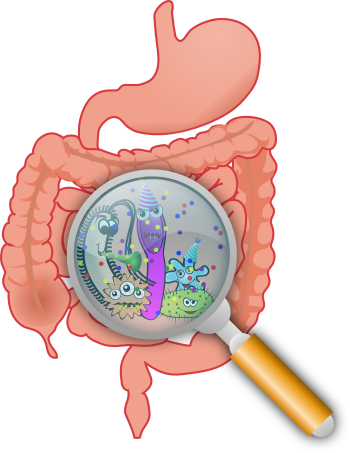
The state of your gut has a surprising impact on your meds—and vice versa.
FAB RESEARCH COMMENT:
For further information please see:See also:
Key points
-
Psychoactive drugs taken orally must pass a gauntlet of gut microbes.
-
Gut microbes can affect the dosage and efficacy of psych meds.
-
Balancing the microbiome through diet can improve the effectiveness of drugs.
Why isn’t there a single drug for depression that works for everyone? Many patients need to try numerous meds before hitting on the right goldilocks drug. What makes everyone so different?
The answer may lie in our gut.
Our gut microbes play a surprisingly large role in how our meds work. They can boost, absorb, degrade, or alter them.
Prozac, for example, is degraded by many gut microbes. If you have those microbes, you may need a higher dose. L-DOPA, prescribed for Parkinson’s, is also degraded by microbes. It’s notoriously difficult to titrate proper L-DOPA dosages. Could the microbiome be putting its trillions of tiny thumbs on the scale?
Drugs can also change the composition of the microbiome, further stirring the pot with feedback. Not just psychoactive drugs, but digoxin, metformin, and some cancer drugs can kill certain microbes and boost others. Even humble Tylenol affects gut microbes. These drugs are often taken in combination with psychoactive drugs, further raising the stakes.
There’s more: Gut microbes can produce their own psychoactive drugs, including serotonin and dopamine, two brain chemicals commonly associated with depression and anxiety. So, psychiatric therapies must contend with a gut microbiome that produces its own meds even as it alters the prescribed meds.
That’s not all: Gut microbes are wildly different from one person to the next. Even in the same person, morning microbes are different from evening microbes. Monday’s microbes are different from Tuesday’s.
Cranking the complexity up to 11, the brain has an impact on the gut microbiome as well, with depression and anxiety contributing to shifts in microbial composition. Even exercise and sleep can contribute to microbiome alterations.
If this all sounds deliriously complex, you’re paying attention. With this kind of microbial turbulence, how do we expect psych meds to ever work?
Complex but important
In a recent review, Sarkis Mazmanian at Cal Tech points out that psychoactive drugs like serotonin reuptake inhibitors are normally given orally, so the practitioner simply can’t ignore what the gut will do to these drugs.
Mazmanian says, “Variations in gut microbiome composition may influence drug metabolism and bioavailability, potentially explaining why some patients respond better to treatment than others.” This has profound implications for psychiatry, but it affects drug development, too. It may not be sufficient to test drugs without considering the microbiome.
Mazmanian isn’t the only one to sound an alert. Ted Dinan is a psychiatrist and researcher and the man who coined the term “psychobiotic” to refer to microbes that can affect your mood. A few years back, I wrote a book with Dinan and John Cryan, both of University College Cork in Ireland, titled The Psychobiotic Revolution. Dinan and Cryan are widely considered to be the world’s top experts in the field.
I reached out to Dinan to get some thoughts about gut microbes and psych meds. I asked him if psychiatrists need to know more about gut microbes to be effective. He told me, “I believe that in the coming years, cases of anxiety and depression will be treated with microbiota-targeted interventions. This would be a significant shift in psychiatric practice. Depression and anxiety are very common disorders, and many patients would prefer natural treatments rather than conventional antidepressants.”
So, should psychiatrists learn microbiology?
"He who takes medicine and neglects diet wastes the skill of his doctors." —Chinese proverb
As the intro to this article demonstrates, microbiology is a huge, multifaceted science with thousands of players pursuing a complex storyline. Learning it all is too big an ask for most psychiatrists. But gut microbes are largely determined by what we eat, so a little knowledge of diet couldn’t hurt.
Dinan concurs, saying, “Along with conventional treatments, I emphasize the importance of a Mediterranean diet. This diet aids the development of an optimal gut microbiota and increases the likelihood that antidepressants and psychological therapies will work.”
It’s not just the psychiatrists who need remedial education. Patients need to learn about the dangers of the Standard American Diet (SAD) of highly processed food. Although the acronym perfectly encapsulates the results of that diet, it is no longer strictly American: we have enthusiastically exported it around the world, as witnessed by the global epidemic of diet-related diseases.
Dinan says, “The hazards associated with ultra-processed food are not just obesity and type 2 diabetes but also include mental health issues. There is a major education challenge to be undertaken with patients. Obesity and stress-related disorders for many patients are intimately connected.”
The psychobiotic diet
Along with John Cryan, Dinan created a psychobiotic diet, which is a slightly modified Mediterranean diet. They performed a gold-standard randomized controlled trial, where all the subjects received dietary advice from a nutritionist and half of them were then assigned to the psychobiotic diet.
The results of the study were surprisingly clear-cut. Those on the psychobiotic diet showed a significant reduction in perceived stress and improvements in sleep quality. These changes were not observed in the group who were given only general dietary advice.
Time to toss your meds?
Although Dinan treats some of his patients with probiotics, he is not suggesting that psychiatrists give up on meds. He says, “There is little evidence that switching to a quality diet and improving the gut microbiota relieves depressive symptoms in the absence of other interventions. I have treated thousands of depressed patients and have never seen such a miracle. Optimal current therapy involves antidepressants or CBT and diet targeting the gut microbiota.”
Dinan also cautions that not all patients can be helped with psychobiotics. Still, he says, “They do alleviate symptoms in milder forms of depression, which covers the majority of patients.”
Dinan believes that in the future, more potent psychobiotics will emerge. Identifying such strains will require major investment. When that happens, the social impact will be enormous. Until then, a balanced microbiome may be the best way to ensure your meds work as advertised.
Food and Behaviour Research is a registered charity (No SC034604) and a company limited by guarantee (Co No SC 253448)
Newsletter Signup
Useful Links
Contact Us
FAB Research
23 Carlton Road
Oxford
OX2 7SA
Important Notice
Medical opinion and guidance should always be sought for any symptoms that might possibly reflect a known or suspected disease, disorder or medical condition. Information provided on this website (or by FAB Research via any other means) does not in any way constitute advice on the treatment of any medical condition formally diagnosed or otherwise.
Site by Redstone Websites. Easy to Use Web Content Management. 2026 © All Rights Reserved.