Price vs Quality: The Hidden Costs of Low-Priced Food
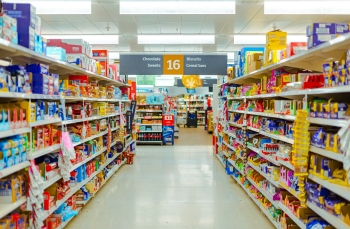
A striking reality is revealed about how price shapes food composition in the United States, to the detriment of consumers in this report by Yuka and Harvard Law School’s Food Law and Policy Clinic.
Web URL: Read this article on Yuka
FAB RESEARCH COMMENT:
Download the full open-access report:- Download here.
You may also be interested in:
-
A Defining Moment: Ultra-Processed Foods No Longer “Safe” for Americans?
- FAB Webinar: Food Affects Behaviour 20+ Years of FAB Research - What next?
- FAB Article: Ultra-Processed Food and Mental Health
- FAB Article: Food Addiction - An Update on the Science
- Food ‘Addiction’ is a highly debated and controversial issue. The food industry plays a key role, highlighting the need for greater awareness of the issues and consideration of potential policy interventions.
For more information on this topic, please see the following lists, which are regularly updated:
Price vs Quality: The Hidden Costs of Low-Priced Food
A joint study by Yuka and Harvard Law School’s Food Law and Policy Clinic
In this report, Yuka and Harvard Law School’s Food Law and Policy Clinic reveal a striking reality about how price shapes food composition in the United States, to the detriment of consumers. Drawing on an analysis of more than 800 food products sold nationwide across 12 of the most common processed food categories, including cereals, bread, and other everyday staples, the study examines how additives, sugar, and sodium vary across price ranges.
The findings are clear: lower-priced products contain significantly more additives, sugar, and salt, exposing a two-tier food system where access to healthier products is largely reserved for those who can afford them. This report combines robust data with policy recommendations to show how food policies shape what ends up on Americans’ plates and what must change to make healthy food the standard, not a privilege.
Key Takeaways
Cheaper Products Contain More Additives
The cheapest products contain 2.6 times more additives than the most expensive ones.
Products Without High-Risk Additives Cost More
Products without high-risk additives are 64% more expensive than those with high-risk additives.
Cheaper Products Contain More Sugar
The cheapest products contain 21% more sugar than the most expensive ones.

Food and Behaviour Research is a registered charity (No SC034604) and a company limited by guarantee (Co No SC 253448)
Newsletter Signup
Useful Links
Contact Us
FAB Research
23 Carlton Road
Oxford
OX2 7SA
Important Notice
Medical opinion and guidance should always be sought for any symptoms that might possibly reflect a known or suspected disease, disorder or medical condition. Information provided on this website (or by FAB Research via any other means) does not in any way constitute advice on the treatment of any medical condition formally diagnosed or otherwise.
Site by Redstone Websites. Easy to Use Web Content Management. 2026 © All Rights Reserved.