The Unexpected Impact of Glyphosate on the Microbiome
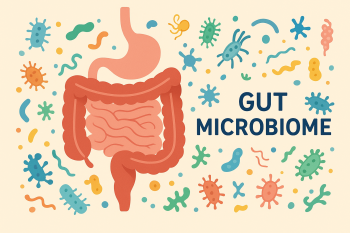
The most popular herbicide on the planet is also killing gut microbes.
FAB RESEARCH COMMENT:
Professor Julia Rucklidge discusses glyphosate in our FAB webinar, which you can access the recording of here:And for more on the Gut-Brain Axis, see this webinar with Professor Philip Calder:
You may also be interested in:
See also:
Key points
- Glyphosate, the chemical in Roundup, is the most popular herbicide in the world.
- Although glyphosate makes life easier for farmers, it is also an antibiotic.
- Glyphosate kills beneficial microbes in the gut, which may be having an impact on our gut and overall health.
“It is difficult to get a man to understand something, when his salary depends on his not understanding it.” —Upton Sinclair
It’s not easy being a farmer. You can’t predict the weather, you don’t know what price your crops will bring, and weeds are a nightmare. But in 1974, Monsanto introduced Roundup, and farmers were thrilled. It killed their weeds with a vengeance, down to the root. That saved them labor and allowed them to skip tilling their fields since they no longer needed to bury the weeds.
The Most Widely Used Herbicide in America
Roundup is the trade name of a chemical called glyphosate, which kills plants by inhibiting enzymes involved in something called the shikimate pathway. Because it only affected plants, not humans or other animals, glyphosate seemed wonderfully safe. Farmers rejoiced. Soon, glyphosate became the most widely used herbicide in America.
But there was a complication. Even at the beginning, researchers knew that there was another victim: Microbes also use the shikimate pathway. Since microbes were largely considered to be pathogenic in those days, it seemed like another big win.
Surprisingly, the microbial angle became essential to the future success of Roundup. In 1983, Monsanto scientists discovered a strain of bacteria that was thriving in the wastewater of a glyphosate factory. It had developed an alternative to the shikimate pathway. This was evolution in action, and it got the scientists’ attention.
If a bacterium could circumvent the damage done by glyphosate, what about plants? Inserting the genes from this mutated microbe into plant seeds, Monsanto engineers managed to create crops that were resistant to glyphosate. The paradigm shifted.
In the 1990s, Monsanto created the first Roundup-Ready crops. Now farmers could simply spray their entire field, killing weeds without harming the crops. It was a huge breakthrough, reducing time and labor and allowing them to enlarge the scale of their farms. Today, roughly 90 percent of soybeans, corn, beets, and canola are farmed this way.
It soon dawned on the researchers that, as well as a weed-killer, they had a potent antibiotic on their hands. In 2010, Monsanto was granted a patent on the use of glyphosate as an antimicrobial. Glyphosate seemed miraculous. It showed science at its best: helping people live better lives with no downside.
The Impact of Glyphosate on Health-Promoting Gut Microbes
And then came the downside. Researchers realized that microbes weren’t all deadly pathogens, and in fact, we can’t live without them.
Microbes in our gut—the microbiome—not only protect us against pathogens but also help us digest our food. Microbes consume fiber and create short-chain fatty acids like butyrate that turn out to have healing properties, keeping our guts in the pink of health.
We even found out that certain microbes could improve our cognition, memory, and mood. These were called psychobiotics by Ted Dinan and John Cryan, pioneers in the gut-brain field. Full disclosure: I wrote a book with that dynamic duo called The Psychobiotic Revolution, published by National Geographic.
A Canadian study found that glyphosate-resistant microbes are inflammatory, potentially affecting neurodevelopment. Worse yet, that damaged microbiome may be passed down through the generations. Another recent study shows that glyphosate damages more than half of the good microbes in our gut. The authors of that study say, “Gastrointestinal issues (such as IBS) and inflammatory conditions have been speculated to arise from gut dysbiosis resulting from glyphosate in a Western diet.”
This is backed by another study pointing out that since the introduction of Roundup-Ready crops, there has been a vastly increased intake of glyphosate by humans and livestock through drinking water, crops, and inhalation of contaminated air.
For foods that depend on microbes, including ferments like sauerkraut and kimchi, antibiotics are detrimental. One study traced problematic fermentation of sauerkraut to the manure used to fertilize the cabbage. The manure came from chickens fed on Roundup-Ready feed. Even filtered through chickens, the glyphosate levels in the cabbage were high enough to spoil the kraut.
One of the most pernicious uses of Roundup is desiccation. Some 3 to 15 percent of farmers use Roundup at harvest to kill and dry all their crops at once, making it easier for heavy machinery to efficiently collect seed crops. Those crops include foods like oats, chickpeas, lentils, and beans. These crops completely absorb the glyphosate, so you can’t wash it off.
How to Protect Your Microbiome From Glyphosate
What can you do about this? For one, you can buy from organic farmers, who avoid glyphosate. Expect to pay more; less than 1 percent of farmland is certified organic. Better yet, grow your own.
You might want to filter your tap water through high-quality activated carbon filters, especially if you live near an agricultural area.
Another tactic is to bulletproof your gut with fiber and ferments. Some ferments can degrade glyphosate, and the microbes in them may help to restore your microbiome. Aspergillus oryzae, a fungus used in soy sauce, sake, and miso, can also degrade glyphosate, so eat more Asian food.
Roundup may have been a miracle for farmers, but it turns out to be a disaster for our microbiome. It’s time for some new thinking.

Food and Behaviour Research is a registered charity (No SC034604) and a company limited by guarantee (Co No SC 253448)
Newsletter Signup
Useful Links
Contact Us
FAB Research
23 Carlton Road
Oxford
OX2 7SA
Important Notice
Medical opinion and guidance should always be sought for any symptoms that might possibly reflect a known or suspected disease, disorder or medical condition. Information provided on this website (or by FAB Research via any other means) does not in any way constitute advice on the treatment of any medical condition formally diagnosed or otherwise.
Site by Redstone Websites. Easy to Use Web Content Management. 2026 © All Rights Reserved.