News
Latest News List

First-ever Study of its Kind Explores the Role of Nutrition in Managing Generalized Anxiety Disorder
The EASe-GAD study reported a 55% reduction in average anxiety scores among those receiving the treatment, in addition to confirming feasibility and acceptability of a nutritional approach to helping individuals experiencing anxiety.

Research suggests obesity in moms doubles the risk of autism in babies
"While further research is needed to explore the biological mechanisms underlying these associations, the findings do stress the need for health interventions that promote healthy living and weight among parents-to-be."

Study reveals link between microbiome and aggression in mice
"Our findings are revolutionary. They suggest that a disrupted microbiome during critical developmental periods can lead to persistent aggressive behaviours later in life."

Newborn screening for vitamin B12 deficiency: Benefits outweigh harms
The Institute for Quality and Efficiency in Health Care (IQWiG) was commissioned to investigate whether screening for vitamin B12 deficiency and the diseases homocystinuria, propionic acidemia and methylmalonic aciduria should be included in the German extended newborn screening (ENS) program.

UK government’s nutrition advisers are paid by world’s largest food companies, BMJ analysis reveals
Campaigners say these conflicts of interest are detrimental to public health, but defenders say they reflect the lack of funding in nutrition research. Sophie Borland reports.
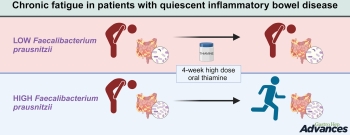
Vitamin B1 linked to reduced fatigue in some inflammatory bowel disease patients
A new study provides insight into why vitamin B1—also known as thiamine—helps some patients regain their energy, while others do not experience the same effect.

Eating fish, not omega-3 supplements during pregnancy associated with lower likelihood of autism diagnosis
Eating any amount of fish during pregnancy was associated with about a 20% lower likelihood of autism spectrum disorder (ASD) diagnosis, particularly in females, and a slight reduction in autism-related traits in offspring, "This study provides yet more evidence for the safety and benefit of regular fish consumption during pregnancy,"

Billions worldwide consume inadequate levels of micronutrients critical to human health, new study finds
"Most people—even more than previously thought, across all regions and countries of all incomes—are not consuming enough of multiple essential micronutrients. These gaps compromise health outcomes and limit human potential on a global scale."

Mental health and chronic diabetes complications strongly linked both ways, study finds
"The findings highlight a need for clinicians to actively screen for mental health disorders in patients with diabetes in addition to screening for chronic complications, which is the recommended standard of care in diabetes."

Inflammation during childhood linked to onset of mental health issues in early adulthood
Children who have persistently raised inflammation are at a higher risk of experiencing serious mental health disorders including psychosis and depression in early adulthood, according to a new study.

Study offers possible explanation for link between diabetes and Alzheimer's
People with type 2 diabetes have more difficulty getting rid of a protein that potentially increases the likelihood of contracting Alzheimer's disease.
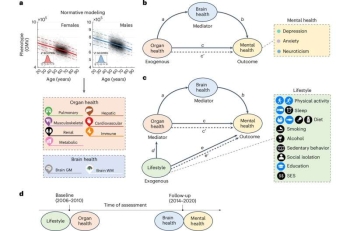
Pathways linking body and brain health and impacts to mental health revealed
Our work reveals the interplay between brain, body and lifestyle, and their collective influence on mental health. Pathways elucidated here may inform behavioural interventions to mitigate or prevent the synergistic co-occurrence of physical and mental disorders.

Food and exercise can treat depression as well as a psychologist
A 'diet and lifestyle' therapy was as effective as psychotherapy for reducing depression, according to a new clinical trial in which both interventions were delivered 'virtually'. And it would cost less to provide.

Psychiatric Diagnoses Don’t Explain ‘Why’.....
Psychiatric diagnoses, like major depressive disorder and ADHD, are not explanatory.

Groundbreaking study claims severe autism can be reversed. Experts say it's 'deeply insulting'
Study claims that autism symptoms were reversed in twins through personalised lifestyle and environmental interventions.

'Diet' soft drinks to get you through the day? Here’s what that may mean for your health
People who drink diet soft drinks regularly and often are more likely to develop certain metabolic conditions (such as diabetes and heart disease) than those who don’t drink diet soft drinks.

Study suggests prenatal diet may play a role in autism
These findings highlight the association between prenatal diet and offspring autism-related outcomes and contribute to the evolving understanding of autism etiology.

Ultra-processed food makes up almost two-thirds of calorie intake of UK adolescents, finds study
"Ultra-processed foods offer convenient and often cheaper solutions to time- and income-poor families, but unfortunately many of these foods also offer poor nutritional value. This could be contributing to the inequalities in health we see emerging across childhood and adolescence."

Autism spectrum disorder associated with altered gut microbiome in children
Our findings highlight the potential application of multikingdom and functional gut microbiota markers as non-invasive diagnostic tools in ASD.

Consuming Omega-3 Fatty Acids Found to Reduce Aggression
Tell me how much omega-3 fatty acids you consume, and I'll tell you your mood.
- <
- 1
- 2
- 3
- 4
- 5
- 6
- 7
- 8
- 9
- 10
- 11
- 12
- 13
- 14
- 15
- 16
- 17
- 18
- 19
- 20
- 21
- 22
- 23
- 24
- 25
- 26
- 27
- 28
- 29
- 30
- 31
- 32
- 33
- 34
- 35
- 36
- 37
- 38
- 39
- 40
- 41
- 42
- 43
- 44
- 45
- 46
- 47
- 48
- 49
- 50
- 51
- 52
- 53
- 54
- 55
- 56
- 57
- 58
- 59
- 60
- 61
- 62
- 63
- 64
- 65
- 66
- 67
- 68
- 69
- 70
- 71
- 72
- 73
- 74
- 75
- 76
- 77
- 78
- 79
- 80
- 81
- 82
- 83
- 84
- 85
- 86
- 87
- 88
- 89
- 90
- 91
- 92
- 93
- 94
- 95
- 96
- 97
- 98
- 99
- 100
- 101
- 102
- 103
- 104
- 105
- 106
- 107
- 108
- 109
- 110
- 111
- 112
- 113
- 114
- 115
- 116
- 117
- 118
- 119
- 120
- 121
- 122
- 123
- 124
- 125
- 126
- 127
- 128
- 129
- 130
- 131
- 132
- 133
- 134
- 135
- 136
- 137
- 138
- 139
- 140
- 141
- 142
- 143
- 144
- 145
- 146
- 147
- 148
- 149
- 150
- 151
- 152
- 153
- 154
- 155
- 156
- 157
- 158
- 159
- 160
- 161
- >

Food and Behaviour Research is a registered charity (No SC034604) and a company limited by guarantee (Co No SC 253448)
Newsletter Signup
Useful Links
Contact Us
FAB Research
23 Carlton Road
Oxford
OX2 7SA
Important Notice
Medical opinion and guidance should always be sought for any symptoms that might possibly reflect a known or suspected disease, disorder or medical condition. Information provided on this website (or by FAB Research via any other means) does not in any way constitute advice on the treatment of any medical condition formally diagnosed or otherwise.
Site by Redstone Websites. Easy to Use Web Content Management. 2026 © All Rights Reserved.