BBC Food Blog - The Trouble with Trans Fats
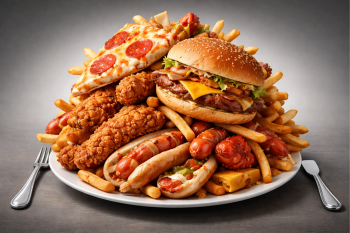
Trans fats have long been known to significantly increase risks for heart disease and diabetes. More recent evidence indicates that they also have damaging effects on human brains and behaviour.
FAB RESEARCH COMMENT:
Scientific and medical evidence has clearly shown that industrial trans fats are toxic - and so should not be in our food supply (see Mozaffarian & Stampfer 2010)
Trans fats have long been known to significantly increase risks for heart disease and diabetes. More recent evidence indicates that they also have damaging effects on human brains and behaviour. This is hardly surprising given that trans fats are artificially warped and twisted versions of the natural omega-3 and omega-6 polyunsaturates that are absolutely required for normal brain development and function.
Denmark was the first country to ban these poisonous fats in 2006. New York and California have followed suit, and bans are now in force or imminent in several European countries. But despite calls from leading public health experts in the UK and US for the UK to ban them too, our government and its agencies continue to claim that 'voluntary agreements' with big players in the food industry are sufficient to protect UK consumers.
In the latest episode of BBC Radio 4's Food Programme, Sheila Dillon exposed the fatal flaws in this argument. And here, she has followed up with a BBC Foodblog on the subject.
13/07/2011 - BBC Food Blog - The Trouble with Trans Fats
by Sheila Dillon
This week’s edition of The Food Programme investigates the issue of trans-fats in our food (artificial fats which are formed during a process called hydrogenation, which turns liquid oil into solid fat).
A key part of the government’s public health policies are the Responsibility Deals - voluntary agreements with the food industry on the ‘healthiness’ of their products. Partners include a wide range of big companies, including KFC, Pepsi, Coca Cola, Pret A Manger and McDonalds.
One of their aims is to get rid of trans fatty acids in their foods by the end of the year. But is that decision sufficient to get rid of a substance that, according to Professor Simon Capewell on this week’s The Food Programme, kills 35 people in the UK every two days?
This week’s edition of The Food Programme investigates the issue of trans-fats in our food (artificial fats which are formed during a process called hydrogenation, which turns liquid oil into solid fat).
A key part of the government’s public health policies are the Responsibility Deals - voluntary agreements with the food industry on the ‘healthiness’ of their products.
Partners include a wide range of big companies, including KFC, Pepsi, Coca Cola, Pret A Manger and McDonalds. One of their aims is to get rid of trans fatty acids in their foods by the end of the year. But is that decision sufficient to get rid of a substance that, according to Professor Simon Capewell on this week’s The Food Programme, kills 35 people in the UK every two days?
Vegetable oils are turned into solids or semi-solids by pumping them with hydrogen. The process creates artificial trans fatty acids. It’s a technique invented over a century ago, but these fats didn’t become a big part of the mainstream diet until after World War Two.
It then really took off in the 1970s when they were promoted as the answer to Health for All: margarines and spreads = good; butter = bad. And the food processing industry loved them - they were cheap, produced foods with a long shelf-life and anything made with them could be sold with the golden glow of healthiness.
There were always farsighted sceptics, but the heavy duty evidence about the dangers of trans-fats didn’t begin to surface until about 20 years ago.
Now they’re directly linked to heart attacks, the World Health Organization calls them toxic and several countries have banned them. Evidence is also accumulating on the way they promote general inflammation in the body and on their damaging effect on the brain.
That’s enough evidence for many scientists and public health specialists to demand a total ban in the UK. A ban needed, they say, because, as we saw recording on one of the main streets in West Bromwich with public health director Dr John Middleton, voluntary agreements don’t cover thousands of takeaways and food shops in the poorer parts of Britain. There, and in similar streets all over the country, cheapness is what sells - and there are no fats quite as cheap as industrial trans-fats.
As we heard in the programme, in a recording made for us by the BBC’s Asian Network, you don’t have to be poor to ruin your health with trans-fats. Thirty-something music producer Rishi Rich told the story of how he lived happily on takeaways until he found himself in hospital on stroke alert, diagnosed with the arteries of a 70-year-old.
You can get up-to-date information about health and nutrition on contributor Dr Alex Richardson’s Food and Behaviour Research website.
The Food and Drink Federation says a ban would be a sledgehammer to crack a nut. What do you think? Is a voluntary agreement by the food industry enough? Or do you think trans-fats should be banned as they are in Denmark, New York, California, Switzerland and Austria?
Food and Behaviour Research is a registered charity (No SC034604) and a company limited by guarantee (Co No SC 253448)
Newsletter Signup
Useful Links
Contact Us
FAB Research
23 Carlton Road
Oxford
OX2 7SA
Important Notice
Medical opinion and guidance should always be sought for any symptoms that might possibly reflect a known or suspected disease, disorder or medical condition. Information provided on this website (or by FAB Research via any other means) does not in any way constitute advice on the treatment of any medical condition formally diagnosed or otherwise.
Site by Redstone Websites. Easy to Use Web Content Management. 2026 © All Rights Reserved.