12 November 2008 - BBC News - Ministers agree food colour ban
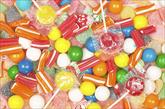
Ministers have agreed that six artificial food colourings should be phased out after research found a link with hyperactivity in children.
Web URL: Read the BBC News item here
FAB RESEARCH COMMENT:
Randomised controlled trials have long shown that artificial food colourings can worsen the behaviour of children with behavioural problems such as ADHD (Attention Deficit Hyperactivity Disorder)- see Schab & Trinh, 2004
Even more important is that two trials commissioned by the UK Food Standards Agency found that these kinds of additives can worsen hyperactivity and inattention in ALL children. See Bateman et al, 2004 and McCann et al, 2007
Despite this scientific evidence, the European Food Standards Agency recently saw no need to ban these additives in children's foods, so it's good news that ministers in the UK have at last seen sense, and that Europe may now follow suit.
The Food Standards Agency called for the voluntary removal earlier this year while European regulators work to agree a continent-wide ban.
WHICH COLOURINGS?
- Sunset yellow (E110) - Colouring found in squashes
- Carmoisine (E122) - Red colouring in jellies
- Tartrazine (E102) - New colouring in lollies, fizzy drinks
- Ponceau 4R (E124) - Red colouring
- Quinoline yellow (E104) - Food colouring
- Allura red AC (E129) - Orange/red food dye
The food colourings should now be phased out by 2009.
Campaigners said it was good news, although they accepted many companies had stopped using them already.
In September 2007, UK researchers reported children behaved impulsively and lost concentration after consuming a drink containing additives.
In the study, 300 children were randomly given one of three drinks, either a potent mix of colourings and additives, a drink that roughly matched the average daily additive intake of a child of their age or a "placebo" drink with no additives.
Their hyperactivity levels were measured before and afterwards, and researchers found that the drink with the highest level of additives had a "significantly adverse" effect compared with the placebo drink.
The six colourings concerned are found in many products such as sweets, confectionery, processed food and takeaways.
In light of the research, the FSA advised parents of hyperactive children to be aware of the potential risks of consuming the colourings.
And earlier this year the regulator said there should be a voluntary phasing out as soon as possible as EU legislation could take some time.
An FSA spokesperson said: "We will working closely with manufacturers and retailers as they take this issue forward."
Anna Glayzer, from the Action on Additives campaign group, said: "It is good news. Some companies have already removed the colours from products, but many are dragging their feet.
"It is essential the FSA keeps up the pressure on companies to get rid of these potentially harmful and utterly unnecessary ingredients."
Food and Behaviour Research is a registered charity (No SC034604) and a company limited by guarantee (Co No SC 253448)
Newsletter Signup
Useful Links
Contact Us
FAB Research
23 Carlton Road
Oxford
OX2 7SA
Important Notice
Medical opinion and guidance should always be sought for any symptoms that might possibly reflect a known or suspected disease, disorder or medical condition. Information provided on this website (or by FAB Research via any other means) does not in any way constitute advice on the treatment of any medical condition formally diagnosed or otherwise.
Site by Redstone Websites. Easy to Use Web Content Management. 2026 © All Rights Reserved.