New Research Warns: Outdated Fish Consumption Advice May Be Harming Children's Brain Development
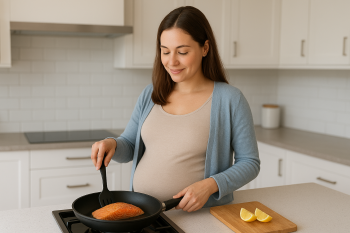
Experts call for an urgent update of official guidelines on fish and seafood in pregnancy, as new study of 300,000 mother-child pairs finds better brain development scores in children whose mothers eat more fish during pregnancy - and NO evidence of harm.
FAB RESEARCH COMMENT:
For details of the underlying research, see:For further information, please see:
-
Study calls for change in guidance about eating fish during pregnancy
-
'Mothers Again Urged to Eat Fish' - as top scientists call for better dietary guidelines
-
Seafood consumption during pregnancy may benefit child development
-
One in four pregnant women not receiving sufficient omega-3 fatty acids, finds study
20th August 2025, FAB Research
---------------------------------------
Outdated government warnings about eating fish during pregnancy may be doing more harm than good for children’s brain development and mental health. In a powerful new study, a team of leading international scientists - including several FAB experts - are sounding the alarm.
This new research, published in Neurotoxicology, finds that when pregnant women cut back on fish, their children may be missing out on vital nutrients - including long chain omega-3 fatty acids - that are essential for building healthy brains and eyes.
The impressive authorship list includes several FAB speakers and connections including the renowned Professor Michael Crawford, Dr Joseph Hibbeln, Dr Tom Brenna, Professor Susan Carlson and Professor Jean Golding, as well as many other leading researchers in the field, including first author Dr Philip Spiller, whose expertise and experience includes 35 years working for the U.S. Food and Drug Administration in this area.
The research reviewed data from more than 300,000 mother–child pairs across the U.S., Europe, and Asia - and the findings were clear:
- children consistently scored higher on IQ, vocabulary, language, memory, attention, motor skills, and other measures of brain development when their mothers ate fish during pregnancy.
- In contrast, no harm from fish consumption was found - even at levels well above current U.S. government limits.
“Fish is the single best source of omega-3s, which the body can’t make in the amounts needed for optimal brain growth,” said study co-author and FAB Expert Speaker Dr. Joseph Hibbeln.
“Avoiding fish out of fear of mercury exposure is actually depriving children of nutrients that help boost IQ, vision, and cognitive development.”
To find out more, please see these FAB webinars, featuring leading experts and co-authors on this study:
-
Critical Brain Nutrients: Evidence that Current Dietary Advice Harms Mental Health – and Potential Solutions
with Dr Joseph Hibbeln
-
Mothers’ Nutrition, Babies' Brains & Lifelong Mental Health
featuring Professor Michael Crawford and Dr Joseph Hibbeln
For years, U.S. federal advisories have urged women to limit fish consumption during pregnancy because of concerns about mercury. But according to the research team, evidence shows that the benefits of eating fish far outweigh the risks - particularly for ocean fish species commonly available in supermarkets.
Ocean fish, in particular, contain a balance of nutrients - including selenium - that protect against mercury’s effects.
The researchers reviewed decades of studies and found “considerable evidence of improvements and little evidence of harm” when mothers ate more fish during pregnancy.
The greatest gains came when women ate 8–12 ounces per week - yet most U.S. women eat far less, reducing fish in their diets or avoiding fish entirely once they become pregnant, fearing harm to their child.
The same dietary patterns are clear in the UK, and likely to be worsened by messaging from our National Health Service, in which:
2. Pregnant women are told to limit consumption to no more than 2 portions of oily fish a week - despite the evidence for better cognitive development in children whose mothers consume more fish and seafood than this.
Outdated Advisories are not Evidence-Based
The authors of this paper point to the U.S. advisories issued since 2001 which urged pregnant women to limit fish to no more than 12 ounces per week, out of caution about mercury exposure. But those limits were set before today’s wealth of evidence and were not based on actual studies of fish consumption.
FAB Research are in agreement with the authors, who urge health agencies to
- update official fish consumption guidelines to reflect the latest science, and
- launch public education campaigns that encourage rather than discourage fish consumption during pregnancy. Such changes could lead to population-wide gains in children’s cognitive and brain development.
A Serious Public Health Issue
This is a serious public health issue as, by following outdated advisories, millions of families may be missing out on a safe, simple way to give their children a brain development advantage.
What's more, insufficient intakes of the special omega-3 in fish & seafood (specifically - the long-chain omega 3 DHA) are also a known risk factor for pre-term birth.
- gold-standard evidence from randomised controlled trials shows increased intakes of the omega-3 found in fish oils can significantly reduce pre-term birth (although this evidence currently remains ignored in NHS and NICE guidelines for pregnancy).
Evidence-based public health campaigns across the globe which encourage fish consumption during pregnancy could not only help improve childhood cognitive outcomes and support healthy development, but could also reduce the major and costly risks associated with low maternal omega-3 intake, including pre-term birth.
For more on Omega-3 and Pre-term Birth:
- See FAB's Article and Downloadable Handout on Omega-3 in Pregnancy for Pre-term Birth - which references:
- The Cochrane systematic review & meta-analysis of 70 RCTs involving almost 20,000 women, showing that supplementing pregnant women with omega-3 LC-PUFA reduces pre-term birth (Middleton et al 2018).
- The Consensus statement from ISSFAL reporting that there is good evidence to support the use of omega-3 during pregnancy to prevent pre-term birth (Best et al 2022).
- Clinical practice guidelines on long chain omega-3 fatty acid supply in pregnancy for risk reduction of pre-term births have been published by leading international experts (Cetin et al 2024).
And for more on fish and seafood in pregnancy:

Food and Behaviour Research is a registered charity (No SC034604) and a company limited by guarantee (Co No SC 253448)
Newsletter Signup
Useful Links
Contact Us
FAB Research
23 Carlton Road
Oxford
OX2 7SA
Important Notice
Medical opinion and guidance should always be sought for any symptoms that might possibly reflect a known or suspected disease, disorder or medical condition. Information provided on this website (or by FAB Research via any other means) does not in any way constitute advice on the treatment of any medical condition formally diagnosed or otherwise.
Site by Redstone Websites. Easy to Use Web Content Management. 2026 © All Rights Reserved.